
Diabetic Foot Care
Diabetes changes the way your feet signal pain. A small blister can become a deep ulcer in days when peripheral neuropathy masks the warning signs.
Schedule a diabetic foot exam →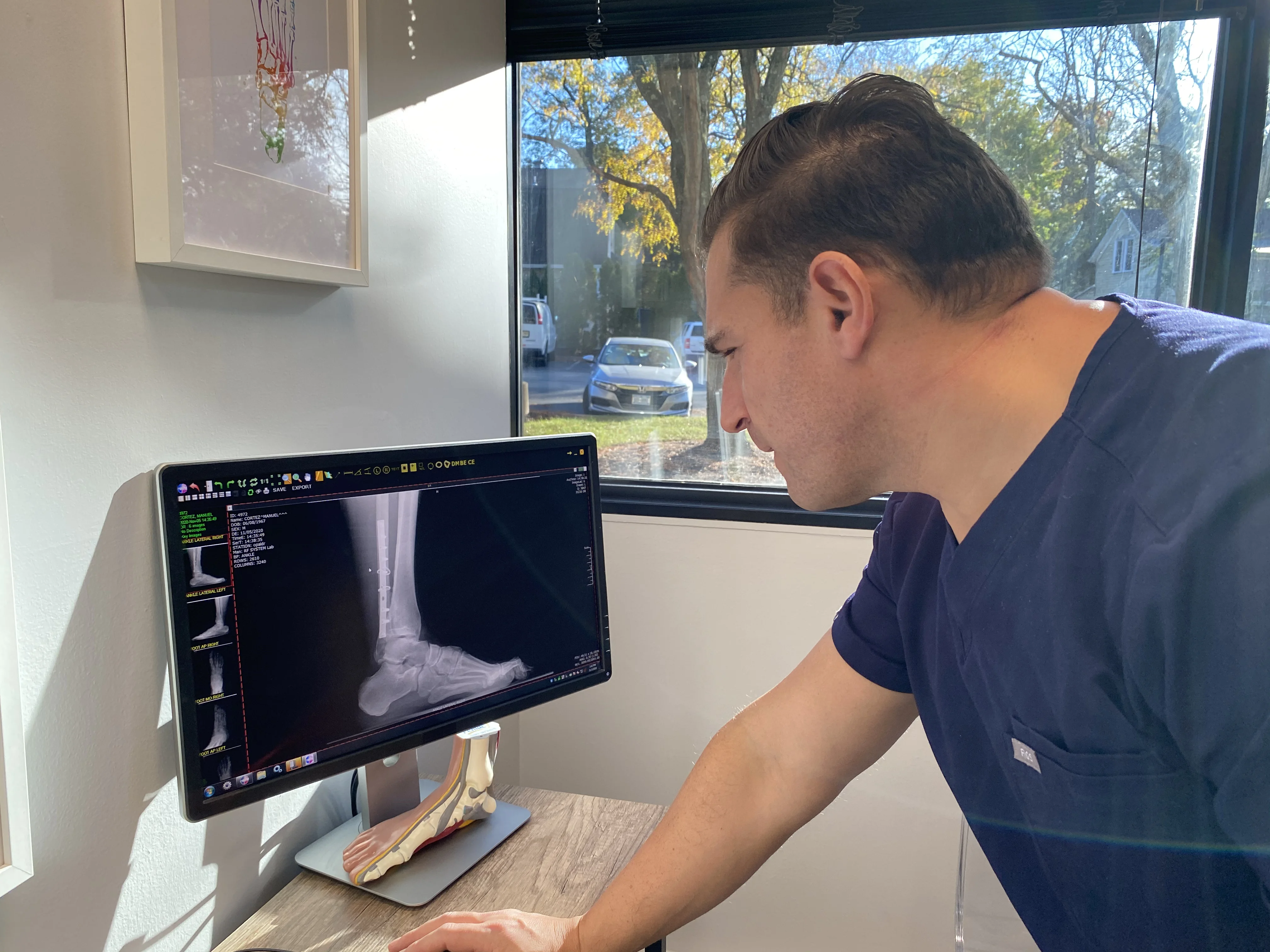
What Is Diabetic Foot Care?
Diabetic foot care is a preventive and therapeutic podiatric discipline focused on monitoring, protecting, and treating feet affected by diabetes-related complications including peripheral neuropathy, peripheral arterial disease, and impaired wound healing.
Essex Union Podiatry provides comprehensive diabetic foot management that begins with baseline neuropathy screening and continues through ongoing monitoring, ulcer prevention, and wound treatment when needed.
Dr. Jason P. Galante, DPM, FACFAS, FABPM, holds certification in hyperbaric medicine, giving our practice an additional tool for treating non-healing diabetic wounds.
This combination of preventive monitoring and advanced treatment capability means patients with diabetes receive continuous, escalating care within a single practice. Essex Union Podiatry coordinates with primary care physicians and endocrinologists to keep diabetic foot health aligned with overall metabolic management.
Conditions We Treat
Peripheral Neuropathy
Diabetic peripheral neuropathy damages sensory nerves in the feet, reducing the ability to feel temperature changes, pressure points, and injuries. Essex Union Podiatry performs monofilament testing and vibration perception assessments to establish neuropathy baselines and track progression at each visit.
Diabetic Foot Ulcers
Ulcers develop when undetected pressure or friction breaks down skin that has lost its protective sensation. Our podiatrists treat active ulcers with debridement, offloading, and advanced wound dressings while identifying the mechanical or vascular factors that caused the breakdown.
Peripheral Arterial Disease
Reduced blood flow to the lower extremities slows healing and increases infection risk. Essex Union Podiatry evaluates pedal pulses and capillary refill to screen for circulation disorders and coordinates vascular referrals when arterial intervention is warranted.
Charcot Neuroarthropathy
Charcot foot occurs when neuropathy-related bone weakening leads to fractures and joint dislocations that reshape the foot architecture. Early detection through temperature monitoring and imaging prevents the severe deformity that results from continued weight-bearing on a structurally compromised foot.
Fungal and Ingrown Toenail Complications
Patients with diabetes face higher infection risk from routine nail conditions. Essex Union Podiatry manages diabetic toenail pathology with sterile technique and post-procedure monitoring to prevent secondary infections.
Our Diabetic Foot Care Process
Comprehensive Foot Assessment
Your first visit includes a detailed neurological and vascular examination. The podiatrist tests protective sensation using Semmes-Weinstein monofilaments, assesses pedal pulses, and inspects skin integrity across all surfaces of both feet.
Risk Stratification
Essex Union Podiatry classifies each patient into a risk category based on neuropathy severity, vascular status, foot deformity, and ulcer history.
This classification determines your monitoring schedule, ranging from annual exams for low-risk patients to monthly visits for those with active wounds.
Preventive Care Plan
Based on your risk profile, our providers prescribe protective footwear recommendations, daily self-inspection routines, and custom orthotics designed to redistribute pressure away from vulnerable areas. Essex Union Podiatry fits therapeutic shoes and diabetic inserts on site.
Wound Management and Advanced Treatment
Active ulcers receive aggressive treatment including sharp debridement, total contact casting, and antimicrobial dressings. For non-healing wounds, Dr. Galante's hyperbaric medicine training supports referral coordination for adjunctive oxygen therapy through wound care services.
Benefits of Diabetic Foot Care
Amputation Prevention
Approximately 85% of diabetes-related amputations begin with a foot ulcer. Regular podiatric monitoring catches early warning signs, including callus buildup, skin temperature changes, and loss of protective sensation, before ulcers develop.
Coordinated Care Within One Practice
Essex Union Podiatry manages diabetic foot care from screening through surgical intervention. Patients avoid the delays and communication gaps that arise when preventive care, wound treatment, and surgical needs are split across separate providers.
Personalized Risk Management
No two diabetic feet carry the same risk profile. Essex Union Podiatry tailors monitoring frequency, footwear prescriptions, and intervention thresholds to each patient's neuropathy grade, vascular status, and activity level.

Why Patients Choose Essex Union Podiatry for Diabetic Care
Why Patients Choose Essex Union Podiatry for Diabetic Care
Essex Union Podiatry has served New Jersey patients for 31 years. Our providers understand that diabetic foot care requires patience, consistency, and a proactive approach. Board-certified expertise and compassionate care define how we manage every diabetic foot case.
Common Questions About Diabetic Foot Care
How often should I see a podiatrist if I have diabetes?
Frequency depends on your risk level. Low-risk patients with no neuropathy should visit annually.
Patients with documented neuropathy or previous ulcers may need quarterly or monthly appointments. Essex Union Podiatry sets a schedule based on your assessment results.
Does insurance cover diabetic foot care?
Most health insurance plans cover medically necessary podiatric care for diabetes patients, including preventive exams, therapeutic shoes, and wound treatment. Contact us about insurance to verify your specific plan.
What should I do if I find a wound on my foot?
Do not attempt to treat it at home. Keep the area clean, avoid weight-bearing on the affected foot, and schedule a diabetic foot exam with Essex Union Podiatry as soon as possible. Diabetic wounds require professional assessment to prevent infection and deterioration.
Can diabetic neuropathy be reversed?
Neuropathy damage is typically permanent, but progression can be slowed through blood sugar management and protective foot care. Essex Union Podiatry monitors neuropathy levels and adjusts your care plan to protect sensation that remains.
What Our Patients Say
Patients managing diabetes trust Essex Union Podiatry for consistent monitoring and responsive care when complications arise. Our providers build long-term relationships with diabetic patients because effective foot care requires ongoing partnership between doctor and patient.
Protect Your Feet, Protect Your Mobility
Diabetes does not have to mean losing ground. Essex Union Podiatry provides the screening, prevention, and treatment that keep your feet healthy and functional.
Schedule a diabetic foot exam at one of our four New Jersey offices, or find your nearest office to start your care plan.