Custom Orthotics
A drugstore insert is built for an average foot. Yours is not average. If the arch, the heel, or the ball of your foot has been aching, the fix is usually not more cushioning but better mechanics.
Schedule a Consultation →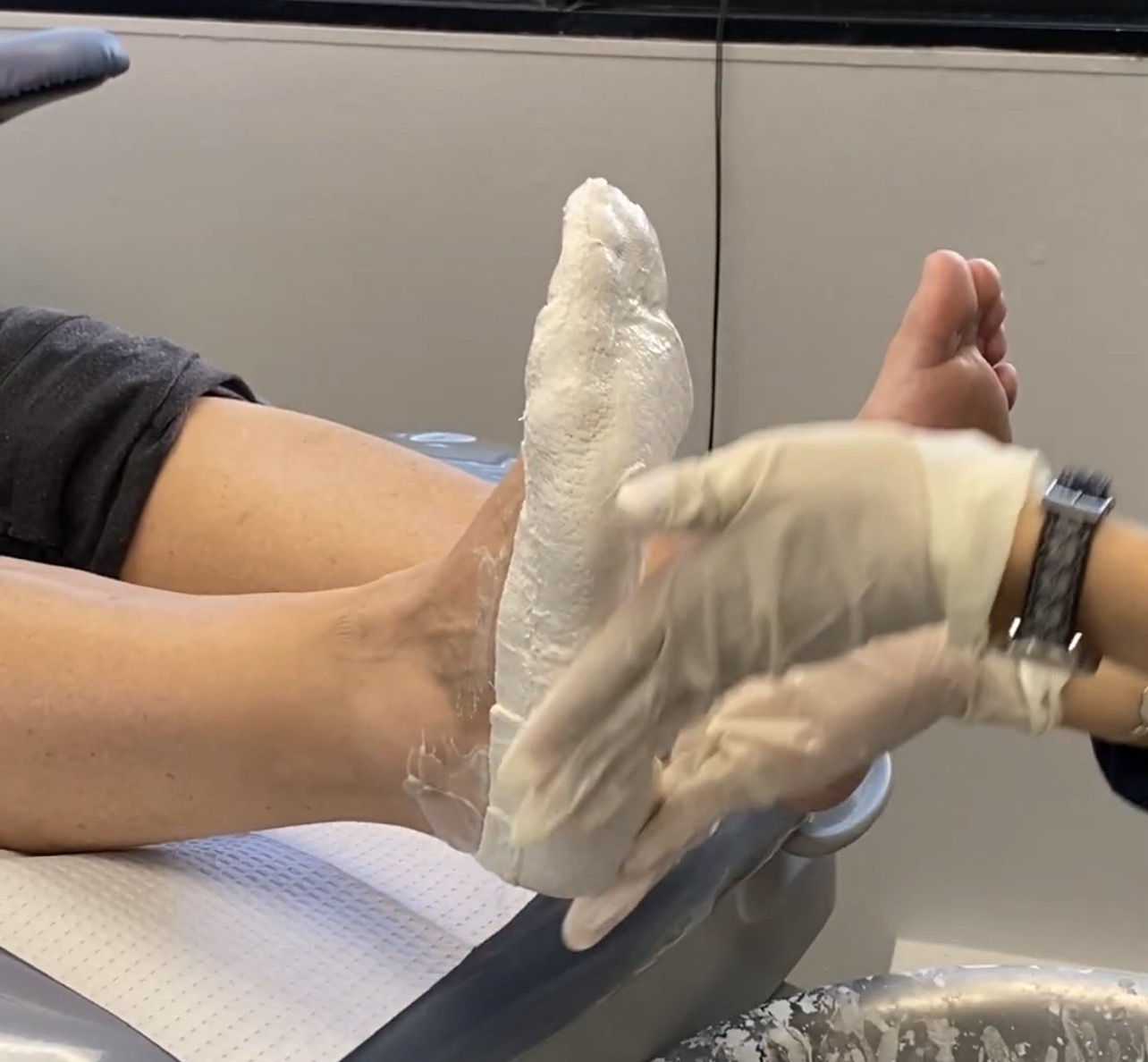
What Are Custom Orthotics?
Custom orthotics are prescription foot supports made from an impression of your foot, taken by cast or digital scan. Because they are built to the shape of your foot and the way it moves, they can correct the mechanics behind heel, arch, and forefoot pain rather than simply softening the surface underneath.
That is the line between a custom orthotic and an over-the-counter insert. A drugstore insole adds padding in a generic shape. A prescription orthotic is designed for your foot type, your gait, and the specific problem your podiatrist is treating, whether that is a collapsing arch, a strained plantar fascia, or a pressure point on a diabetic foot.
Essex Union Podiatry examines your foot, watches how you walk, and takes the impression in the office. The finished orthotic addresses the cause of the pain, which is why it holds up where generic inserts wear out and give up.
What Custom Orthotics Address
Plantar Fasciitis and Heel Pain
When the plantar fascia is overloaded, the first steps of the morning can be the worst part of the day. Custom orthotics support the arch and control the motion that strains the tissue, which is why they are a core part of plantar fasciitis treatment at Essex Union Podiatry.
Flat Feet and Fallen Arches
A foot that rolls inward and flattens with every step pulls the whole leg out of alignment. Prescription orthotics rebuild the support the arch has lost, restoring a more neutral position and easing the strain that flat feet pass up into the ankles, knees, and back.
Diabetic Foot Protection
For patients with diabetes, a single pressure point can turn into an ulcer. Custom orthotics redistribute load away from those high-pressure areas, an approach called offloading that is central to diabetic foot care and to keeping small problems from becoming serious ones.
Sports and Overuse Injuries
Runners, athletes, and anyone on their feet all day accumulate stress in the same tissues over and over. When a mechanical fault is feeding an overuse injury, custom orthotics correct the motion driving it so the tissue can recover and stay recovered.
Our Custom Orthotics Process
Biomechanical Evaluation
Your podiatrist examines your feet and watches how you stand and walk. That assessment identifies the mechanical fault behind your pain, because an orthotic only works when it is built to correct the right problem.
Casting or Digital Scan
Essex Union Podiatry captures the exact shape of your foot with a cast or a digital scan taken in the office. This impression is what separates a custom orthotic from a generic insert, and it is what the finished device is built around.
Prescription and Fabrication
Your podiatrist writes the prescription, specifying the materials, arch support, and corrections your feet need. The orthotics are then fabricated to that prescription, matched to your foot type and the condition being treated rather than pulled off a shelf.
Fitting and Follow-Up
When the orthotics are ready, your podiatrist fits them, checks them in your shoes, and explains how to break them in. Follow-up visits confirm they are doing their job and allow any adjustments, so the fit is right rather than close enough.
Benefits of Custom Orthotics
Built for Your Foot, Not an Average One
A custom orthotic starts from an impression of your own foot, so it supports your arch in the right place and corrects your gait rather than a generic one. That fit is why a prescription device can resolve pain a shelf insert only masks.
Treats the Cause, Not Just the Symptom
Cushioning softens a symptom. Correcting the mechanics addresses what is producing it. By changing how your foot loads and moves, custom orthotics relieve the strain at its source, which is why the relief holds instead of fading as padding compresses.
Protection Up the Whole Chain
Feet set the foundation for the ankles, knees, hips, and back. When orthotics restore a neutral, balanced stride, they ease the compensations that a poorly aligned foot sends up the leg, protecting joints well beyond the foot itself.
Durable, Prescription-Grade Support
Built from sturdier materials than drugstore foam, custom orthotics hold their shape and their correction far longer. They are made to be worn every day and to keep working long after a generic insert would have flattened out.
Why Choose Essex Union Podiatry for Custom Orthotics
Prescribed by Foot Specialists
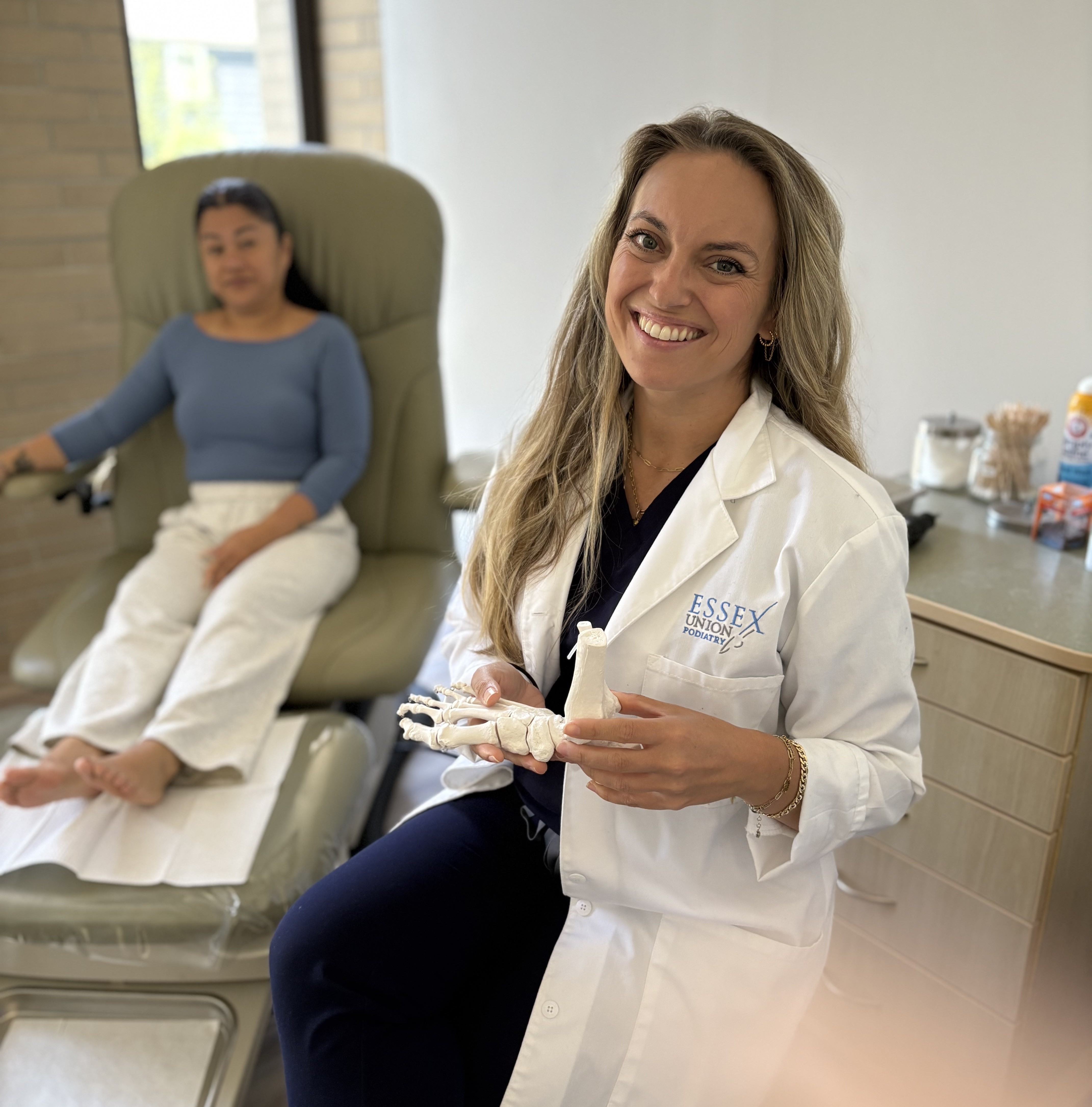
A custom orthotic is only as good as the diagnosis behind it. At Essex Union Podiatry the same podiatrists who examine your gait write the prescription, so the device is aimed at the actual mechanical fault rather than a guess.
Part of a Complete Treatment Plan
Orthotics rarely work alone. Our doctors fit them alongside the stretching, footwear guidance, and other care your condition needs, so the orthotic reinforces the rest of the plan instead of standing in for it.
Four New Jersey Offices
Casting, fitting, and follow-up adjustments stay convenient. Essex Union Podiatry serves patients from Rahway, Springfield, Caldwell, and Jersey City. Find your nearest office.
Common Questions About Custom Orthotics
How are custom orthotics different from store-bought inserts?
A store-bought insert is a generic shape that adds cushioning. A custom orthotic is made from a cast or scan of your own foot and prescribed to correct a specific mechanical problem. Because it is built for your foot and your gait, it can resolve pain that a padded insole only softens temporarily.
How are custom orthotics made?
Your podiatrist examines your feet, watches how you walk, and takes an impression by cast or digital scan in the office. That impression, along with a prescription specifying the support and corrections you need, is used to fabricate the orthotics to your foot rather than to an average one.
What conditions do custom orthotics treat?
Custom orthotics help with plantar fasciitis and heel pain, flat feet and fallen arches, diabetic foot pressure that needs offloading, and sports overuse injuries driven by a mechanical fault. Essex Union Podiatry determines whether orthotics fit your case during the evaluation.
How long do custom orthotics last?
Because they are made from sturdier, prescription-grade materials, custom orthotics hold their correction far longer than drugstore foam. With everyday wear they last for years, and your podiatrist checks them at follow-up visits to confirm they are still supporting your foot the way they should.
Do I need custom orthotics or will an over-the-counter insert do?
It depends on the problem. Mild, occasional discomfort may respond to an over-the-counter insert. Persistent heel, arch, or forefoot pain, a structural issue like flat feet, or a diabetic foot at risk generally calls for a prescription orthotic built to your foot. An evaluation at Essex Union Podiatry sorts out which you need.
Does insurance cover custom orthotics?
Coverage varies by plan. Some policies cover custom orthotics when they are medically necessary, while others do not. Essex Union Podiatry's office team verifies your benefits before fabrication so you know what to expect.
What Our Patients Say
I've been dealing with plantar fasciitis for months, waking up to excruciating heel pain every morning. When I finally made an appointment with Dr. Haller, I was impressed by how thorough her examination was. After following her recommendations and getting custom orthotics, my pain has decreased by about 80%.
Jordan Brasher
Rahway
After a nagging heel pain made it tough to play basketball, Dr. Galante's custom insert got me back on the court pain-free!
Bashow Dhere
Support Built for Your Feet, Not an Average Pair
Stop padding over a problem an insert cannot fix. Essex Union Podiatry evaluates your gait, takes the impression in the office, and prescribes orthotics built to correct the mechanics behind your pain.
Schedule an orthotics fitting at our Rahway, Springfield, Caldwell, or Jersey City office.
Heel pain that will not quit? Read about plantar fasciitis treatment.