
Wart & Fungus Treatment
Plantar warts and fungal infections are stubborn, uncomfortable, and easy to put off. They are also straightforward to treat once a podiatrist looks at them.
Schedule a Consultation →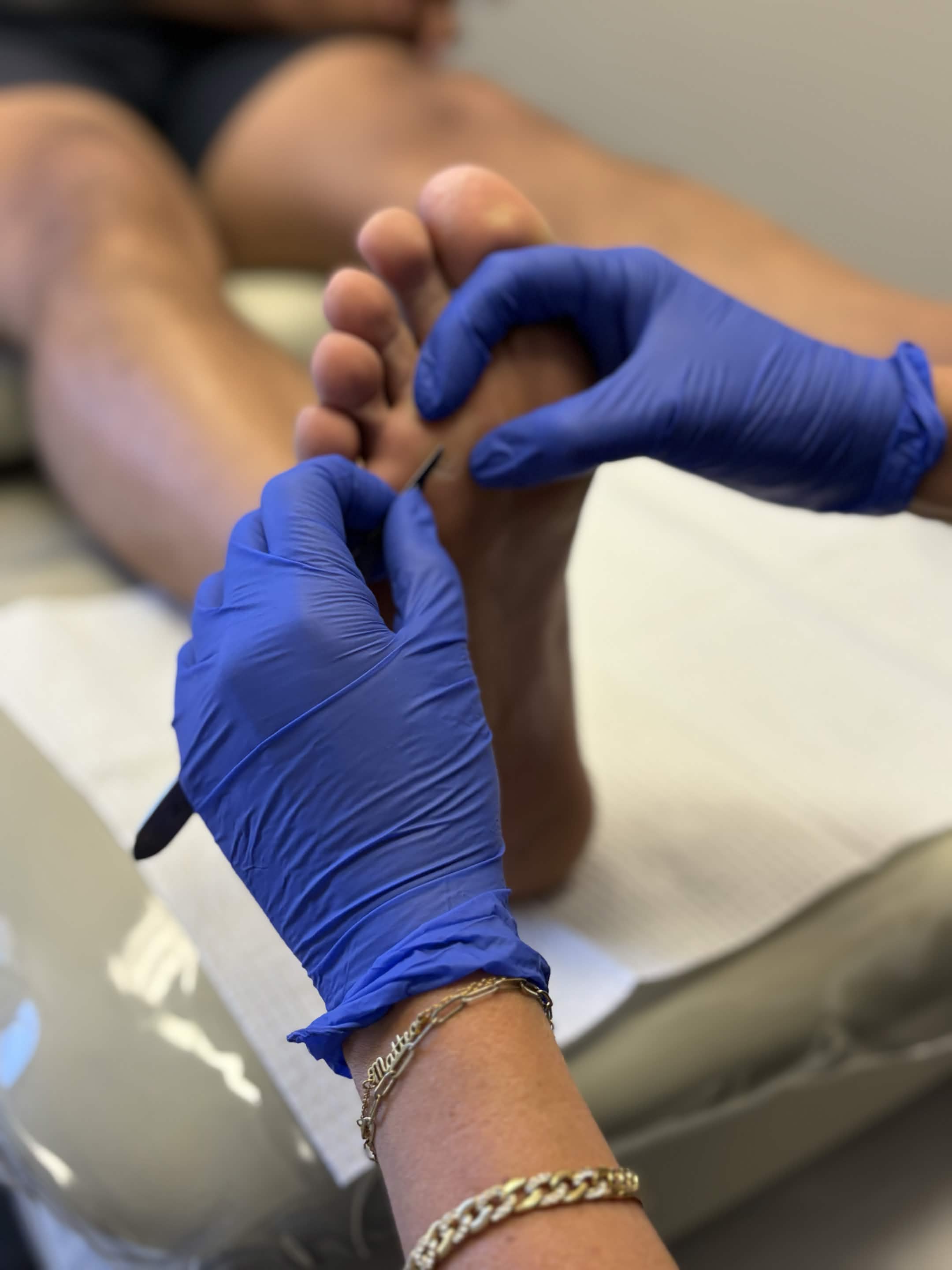
What Is Wart and Fungus Treatment?
Plantar warts are caused by the human papillomavirus entering the skin through small breaks on the sole of the foot. They grow inward under the pressure of walking, which is why they often feel like a stone in the shoe.
Fungal infections of the skin and nails come from a different family of organisms. Athlete's foot affects the skin between and beneath the toes. Toenail fungus works its way into the nail plate, leaving nails thickened, yellowed, and brittle.
Essex Union Podiatry treats both in the office. Wart treatment removes or destroys the infected tissue so healthy skin can grow back. Fungal treatment targets the organism in the skin or nail and addresses the conditions that let it take hold.
Neither condition reliably clears on its own, and neither responds well to guesswork. Over-the-counter acids can burn healthy skin around a wart without reaching the root, and drugstore antifungals rarely penetrate a thickened nail.
What We Treat
Plantar Warts
Warts on the weight-bearing surface of the foot press inward with every step. Patients often describe the feeling as walking on a pebble.
Essex Union Podiatry treats single warts, clustered mosaic warts, and warts that have already resisted home treatment. Our podiatrists confirm the diagnosis first, because corns, calluses, and warts are routinely mistaken for one another and each needs a different treatment.
Recurrent and Resistant Warts
Warts that keep returning after home treatment are common. The virus survives in the deeper layer of skin even when the visible surface is gone.
Our providers use in-office methods that reach the base of the lesion rather than shaving the top of it, and follow up until the site is fully resolved.
Toenail Fungus
Fungal nails are thick, discolored, crumbling, and often painful under shoe pressure. Essex Union Podiatry evaluates the nail, confirms that fungus is the actual cause, and builds a treatment plan around how far the infection has advanced.
Some nails respond to topical therapy and debridement. Others need oral medication. The evaluation determines which.
Athlete's Foot and Fungal Skin Infections
Itching, peeling, cracking, and burning between the toes signal a fungal skin infection. Left alone it can spread to the nails and, in patients with diabetes, open the door to more serious infection.
Essex Union Podiatry treats the active infection and addresses the moisture, footwear, and hygiene factors that let it return. Patients managing diabetes should pair this with diabetic foot care.
Our Wart and Fungus Treatment Process
Same-Day Evaluation
Your podiatrist examines the lesion or nail and confirms what it actually is. Warts, corns, and calluses look alike to the untrained eye, and fungal-looking nails are not always fungus. Getting the diagnosis right is what makes a single visit enough.
Pain-Free, In-Office Treatment
Treatment happens in the office, the same day, in the same appointment. Your podiatrist numbs the area or uses a comfortable topical approach depending on the treatment chosen. Patients consistently report the procedure is pain-free.
Walk Out and Drive Home
There is no general anesthesia and no sedation, so there is no recovery room and no need to arrange a ride. You can drive yourself home right after the treatment and return to your normal day.
Follow-Up Until It Is Gone
Warts and fungal infections can be persistent. Your podiatrist schedules follow-up visits to confirm the lesion has cleared or the nail is growing in healthy, and treats any recurrence before it re-establishes.
Benefits of Professional Wart and Fungus Treatment
Pain-Free Treatment
The reason most patients delay treatment is the expectation that it will hurt. It does not. Essex Union Podiatry uses pain-free wart treatment methods, and patients routinely tell us the appointment was far easier than the months they spent avoiding it.
Same-Day, In-Office Procedures
Treatment does not require a surgical center, a separate scheduling process, or a second trip. It happens in the office during your appointment. For most patients, one visit is where treatment begins and the pain ends.
Drive Yourself Home Afterward
Because there is no sedation or general anesthesia, there is no recovery period to sit through and no ride to arrange. You can drive home after the treatment and get on with your day.
A Correct Diagnosis First
Home wart removers applied to a callus do nothing. Antifungal polish applied to a nail damaged by trauma does nothing. A podiatrist confirms what is actually there before treating it, which is the difference between one appointment and a year of failed drugstore attempts.
Why Choose Essex Union Podiatry for Wart and Fungus Treatment
Podiatrists Who Treat Feet All Day
A foot lesion is a footnote in a general practice. At Essex Union Podiatry it is the whole practice. Our podiatrists see plantar warts and fungal nails every week and know which cases clear with a conservative approach and which need something more aggressive.
Treatment That Fits Into a Normal Day
Same-day, in-office treatment with no sedation means no time off work, no driver, and no recovery plan. Patients come in, get treated, and drive home.
Four New Jersey Offices
Essex Union Podiatry serves patients from Rahway, Springfield, Caldwell, and Jersey City, so treatment and follow-up stay close to home. Find your nearest office.
Common Questions About Wart and Fungus Treatment
Is wart treatment painful?
No. Essex Union Podiatry provides pain-free wart treatment. Your podiatrist numbs the area or uses a comfortable topical method depending on the approach chosen, and patients consistently report the procedure is far easier than they expected.
Can I drive home after wart treatment?
Yes. Treatment is done in the office without sedation or general anesthesia, so there is no recovery room and no need to arrange a ride. You can drive yourself home right after the treatment.
Can the wart be treated the same day I come in?
In most cases, yes. Wart treatment at Essex Union Podiatry is a same-day, in-office procedure. Your podiatrist evaluates the lesion and treats it in the same appointment.
Why did over-the-counter wart treatment fail?
Drugstore acids treat the surface of the wart while the virus lives deeper in the skin. They also cannot tell a wart from a callus, so many people treat the wrong thing for months. A podiatrist confirms the diagnosis and reaches the base of the lesion.
How long does toenail fungus take to clear?
Nails grow slowly, so a treated toenail takes several months to grow out healthy even when treatment works from the first visit. Your podiatrist will tell you what to expect for your specific nail and monitor the new growth at follow-up.
Will the wart come back?
Warts can recur because the virus persists in the surrounding skin. Essex Union Podiatry follows up after treatment to confirm the site has cleared and treats any recurrence early, before it becomes established again.
What Our Patients Say
Service was quick and painless. They had a same day opening for me like 15 minutes after I called. They answered every question. Showed empathy and care for my injury.
Tom Andriani
Dr. Testa is incredibly caring and attentive. She takes the time to really listen, explain things clearly, and make sure she feels comfortable and understood.
Brittany P
One Appointment. Pain-Free. Drive Yourself Home.
Pain-free wart treatment with same-day, in-office procedures at Essex Union Podiatry. No sedation, no recovery room, no ride to arrange.
Schedule your wart or fungus treatment at our Rahway, Springfield, Caldwell, or Jersey City office.
Want to understand the bigger picture? Read about the skin conditions we treat.