
Ingrown Toenail Removal
An ingrown toenail turns every step into a negotiation with pain. Essex Union Podiatry provides professional ingrown toenail removal at four New Jersey offices, offering same-day relief for a condition that rarely resolves on its own.
Schedule a Consultation →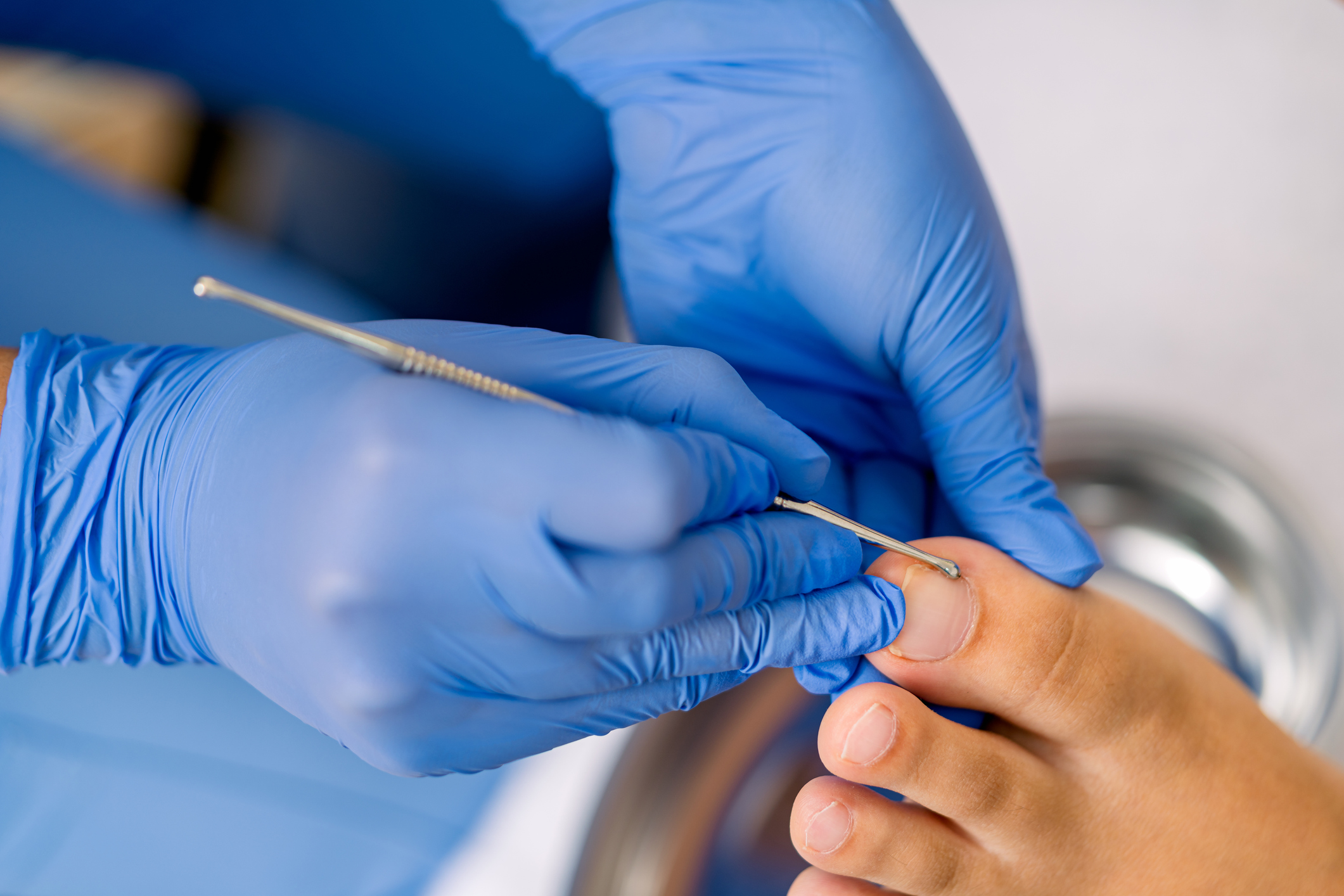
What Is Ingrown Toenail Removal?
An ingrown toenail occurs when the edge or corner of a toenail grows into the surrounding skin, causing pain, swelling, and potential infection.
Ingrown toenail removal is an in-office procedure where a podiatrist trims or removes the portion of nail pressing into the tissue, then treats the nail bed to prevent regrowth in the affected area.
Essex Union Podiatry treats ingrown toenails at all stages, from early inflammation to infected cases requiring antibiotics and surgical correction. Our podiatrists assess each case individually and recommend the least invasive option that provides lasting results.
The condition commonly affects the big toe but can develop on any toenail. Tight shoes, improper trimming, genetic nail curvature, and trauma all contribute to ingrown nail formation.
Ingrown toenail removal is a same-day, in-office procedure that takes about 15 minutes. Most patients return to their shoes and drive themselves home the same day.
When Ingrown Toenails Need Professional Treatment
Infected Ingrown Toenails
Redness, warmth, drainage, and increasing pain signal infection in the tissue surrounding the nail. Home soaking will not resolve a bacterial infection. Essex Union Podiatry removes the offending nail border and prescribes targeted antibiotics when clinical signs warrant them.
Recurrent Ingrown Toenails
Some patients trim an ingrown nail at home only to have it return weeks later. Repeated episodes indicate that the nail growth pattern itself needs correction.
A permanent procedure called a matrixectomy destroys the nail root at the border to prevent the ingrown edge from regrowing.
Diabetic Patients with Ingrown Toenails
Patients with diabetes face elevated infection risk from any break in foot skin. An ingrown toenail can progress to cellulitis or abscess without timely intervention. Essex Union Podiatry prioritizes diabetic foot concerns and coordinates ingrown nail treatment with broader diabetic foot care management.
Pediatric Ingrown Toenails
Children and adolescents develop ingrown toenails from athletic footwear, sports injuries, and rapid growth. Our providers are experienced with pediatric podiatry and use age-appropriate techniques to make the procedure comfortable for younger patients.
Our Ingrown Toenail Removal Process
Evaluation and Diagnosis
Your podiatrist examines the affected toe, checks for signs of infection, and reviews your history of ingrown nails. This assessment determines whether you need a simple trim or a permanent correction.
Local Anesthesia
A local anesthetic numbs the toe completely before any instrument touches the nail. Most patients feel only the initial injection, and the toe remains pain-free throughout the procedure.
Nail Border Removal
Your doctor carefully removes the ingrown portion of the nail using sterile instruments. For temporary relief, only the offending edge is trimmed. For permanent correction, Essex Union Podiatry applies a chemical matrixectomy to the nail root, preventing that border from growing back.
Wound Care and Follow-Up
The treated area is bandaged with antibiotic ointment. You receive specific home care instructions for soaking and dressing changes. Most patients walk out of the office immediately and return to normal shoes within one to two weeks.
Benefits of Professional Ingrown Toenail Removal
Immediate Pain Relief
The ingrown nail edge causes pain by pressing into inflamed tissue. Once your podiatrist removes that pressure source, relief is immediate. Essex Union Podiatry patients describe the difference between walking into the office and walking out as dramatic.
Permanent Correction Available
A matrixectomy stops the ingrown portion of the nail from regrowing. This eliminates the cycle of temporary home fixes followed by another painful episode weeks later. Essex Union Podiatry performs permanent correction in a single office visit.
Lower Infection Risk Than Home Treatment
Bathroom surgery with unsterilized tools invites bacteria into already-inflamed tissue. Professional removal in a sterile clinical environment with proper instruments reduces infection risk and speeds healing. Our New Jersey offices maintain strict sterilization protocols for every procedure.

Why Choose Essex Union Podiatry for Ingrown Toenail Treatment
Board-Certified Podiatrists with Surgical Precision
Every ingrown toenail removal at Essex Union Podiatry is performed by one of our podiatrists. Board-certified doctors Dr. Galante, Dr. Testa, and Dr. Haller, along with board-qualified foot and ankle surgeon Dr. Vesce, each bring surgical training and steady hands to a procedure that benefits from clinical experience. Precise removal means less tissue disruption and faster healing.
A Practice That Sees the Whole Patient
An ingrown toenail can signal underlying issues: fungal nail disease, biomechanical abnormalities, or poor footwear fit. Our providers evaluate contributing factors so the treatment plan addresses the cause, not just the symptom.
Four New Jersey Offices for Quick Access
Ingrown toenails are urgent. Waiting days for an appointment risks worsening infection.
Essex Union Podiatry serves patients from Rahway, Caldwell, Springfield, and Jersey City with scheduling that prioritizes acute conditions. Find your nearest office.
Common Questions About Ingrown Toenail Removal
Does ingrown toenail removal hurt?
Local anesthesia numbs the toe before the procedure begins. Patients feel pressure but not pain during the removal. Post-procedure discomfort is mild and manageable with over-the-counter pain relievers.
How long does the procedure take?
Most ingrown toenail removals at Essex Union Podiatry take about 15 minutes from anesthesia to bandaging. You can plan to be in and out of the office within an hour.
Will the ingrown toenail come back?
A simple trim may allow recurrence if the nail growth pattern is unchanged. Permanent correction via matrixectomy has a high success rate for preventing regrowth of the ingrown border. Your podiatrist recommends the appropriate option based on your history.
Can I walk after the procedure?
Yes. Most patients walk out of the office immediately in open-toed footwear or a surgical shoe. Strenuous activity should be avoided for a few days, but daily walking is fine.
What Our Patients Say
Service was quick and painless. They had a same day opening for me like 15 minutes after I called. They answered every question. Showed empathy and care for my injury.
Tom Andriani
Dr. Testa is incredibly caring and attentive. She takes the time to really listen, explain things clearly, and make sure she feels comfortable and understood.
Brittany P
Stop Living Around an Ingrown Toenail
An ingrown nail will not fix itself, but a board-certified podiatrist can fix it in under 30 minutes. Schedule your ingrown toenail removal at Essex Union Podiatry at our Rahway, Caldwell, Springfield, or Jersey City offices.
Dealing with a related issue? Learn more about skin conditions treated at our practice.